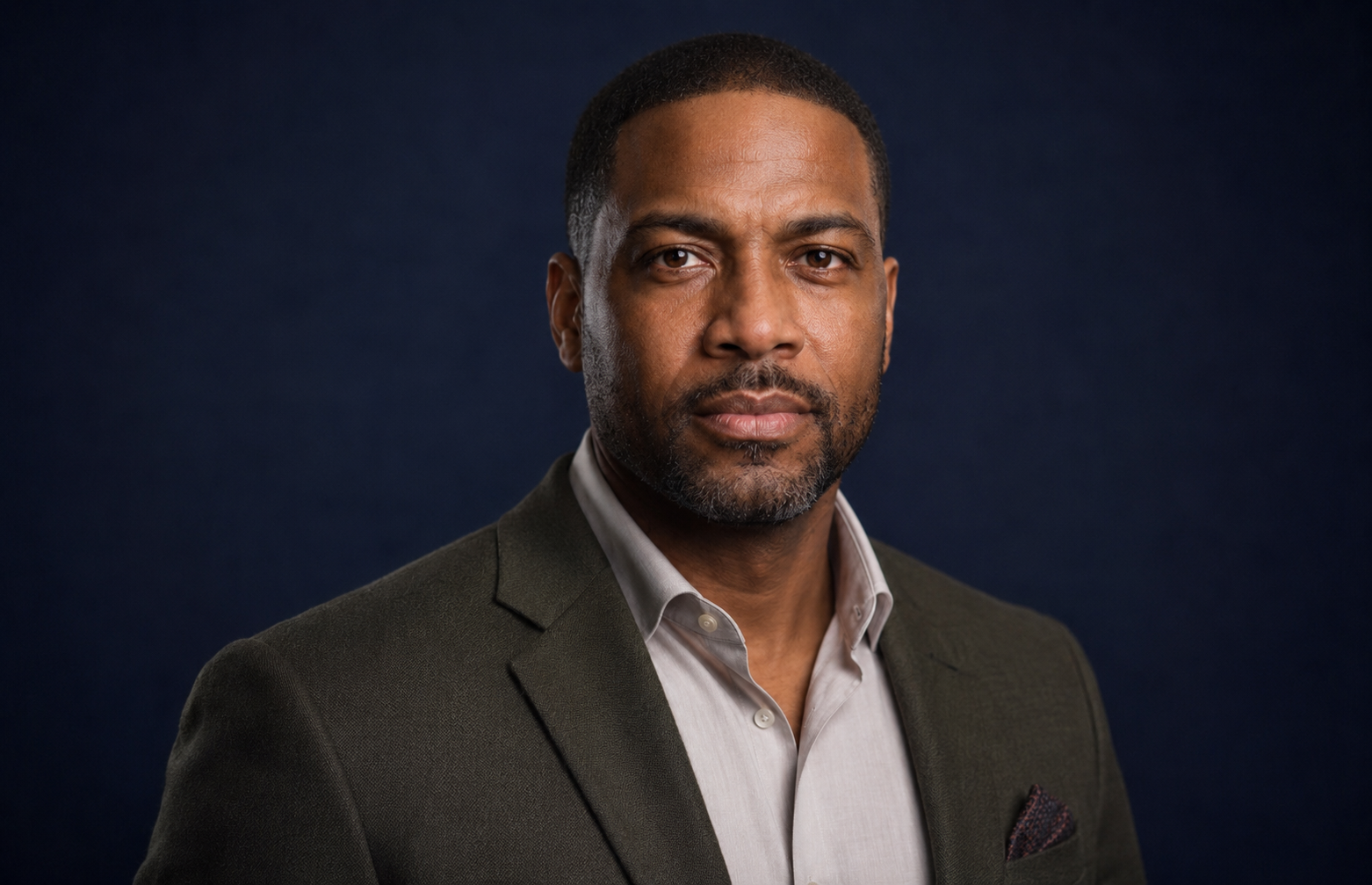
The team portraits are photographs of Atlantic Image Defense staff. To give the page a consistent look, their backgrounds, lighting and framing were processed with AI tools, and the page displays them in black and white. This treatment can make the portraits look AI-generated; they are not.
ATLANTIC IMAGE DEFENSE LLC is a company registered in New York (DOS ID 7924876); its authority in each case can be verified by certificate on this site.
Our team
Specialists dedicated to evidence, monitoring and responsible case preparation
William Will Parker
Founder & Managing Director
Company Strategy | Partner Development
Operational responsibilityStrategic direction, operating priorities and partner development.
Sarah M. Whitman
Copyright Protection Director
Rights Documentation | Copyright Review
Operational responsibilityReview of rights documentation and copyright records supporting case preparation.
Jonathan Reed
Image Enforcement Manager
Case Review | Amicable Resolution | Counsel Liaison
Operational responsibilityCoordinates case review, prepares Case Files for review by Atlantic’s counsel where a matter remains unresolved, and leads amicable resolution with recipients.
Emily Parker
Visual Evidence Specialist
Visual Verification | Evidence Preparation
Operational responsibilityVisual verification and preparation of image evidence for documented case review.
Thomas Blake
Digital Monitoring Lead
Image Tracking | Digital Monitoring
Operational responsibilityImage tracking and operational digital-monitoring workflows.
Rachel Morgan
Client Relations Director
Contributor Relations | Client Support
Operational responsibilityContributor relations, client communications and support follow-up.
Jonathan Charpentier
Communications & Visual Intelligence Officer
Professional Photographer | Image Analysis Specialist
Operational responsibilityVisual analysis and communications informed by professional photography practice.
Transparency on portrait processing
In the interest of transparency, here is an example of the processing applied to the team portraits, published with Jonathan Charpentier’s consent. The first image is the original photograph. The second is the same photograph after processing with AI tools: background replaced, lighting reworked and framing widened around the upper body. The face and expression are those of the original photograph. On this page, the portraits are then displayed in black and white.
Original photograph (cropped)After processing
Governance and accountability
Human accountability across specialist review functions
Atlantic assigns specialist responsibilities across evidence review, case administration, communications, financial verification and legal escalation, with documented human accountability for consequential decisions.
01Role definition
02Least privilege
03Conflict checks
04Human approvals
05Auditability
01
Operational roles
Protected-work contributors, reviewers and case specialists contribute within defined responsibilities, while qualified external counsel may be engaged when jurisdiction-specific legal interpretation or representation is required.
A role description is not a representation that every matter is handled by the same individual. Work may be allocated according to competence, conflict status, language, jurisdiction and workload.
02
Separation of duties
High-impact actions are subject to documented authorization, traceability and independent verification appropriate to the action concerned.
These separations reduce accidental bias, unauthorized changes and single-person control over high-impact actions.
03
Competence and external expertise
Specialist reviewers document technical integrity, chronology and observed use so that rights, authority and legal questions can be assessed on a complete case record.
Where a matter requires legal advice, court representation, local-law interpretation or privileged communications, Atlantic refers the issue to appropriately licensed counsel and identifies the scope of that counsel’s engagement.
04
Conflicts, confidentiality and conduct
Potential conflicts should be disclosed and routed for review. Access to cases should be limited to persons who need it. Public statements should avoid naming parties or disclosing allegations without a lawful, documented reason.
Atlantic administers rights, evidence and case-resolution workflows under documented authority. Judicial remedies and compulsory measures are pursued through competent authorities and qualified counsel where applicable.