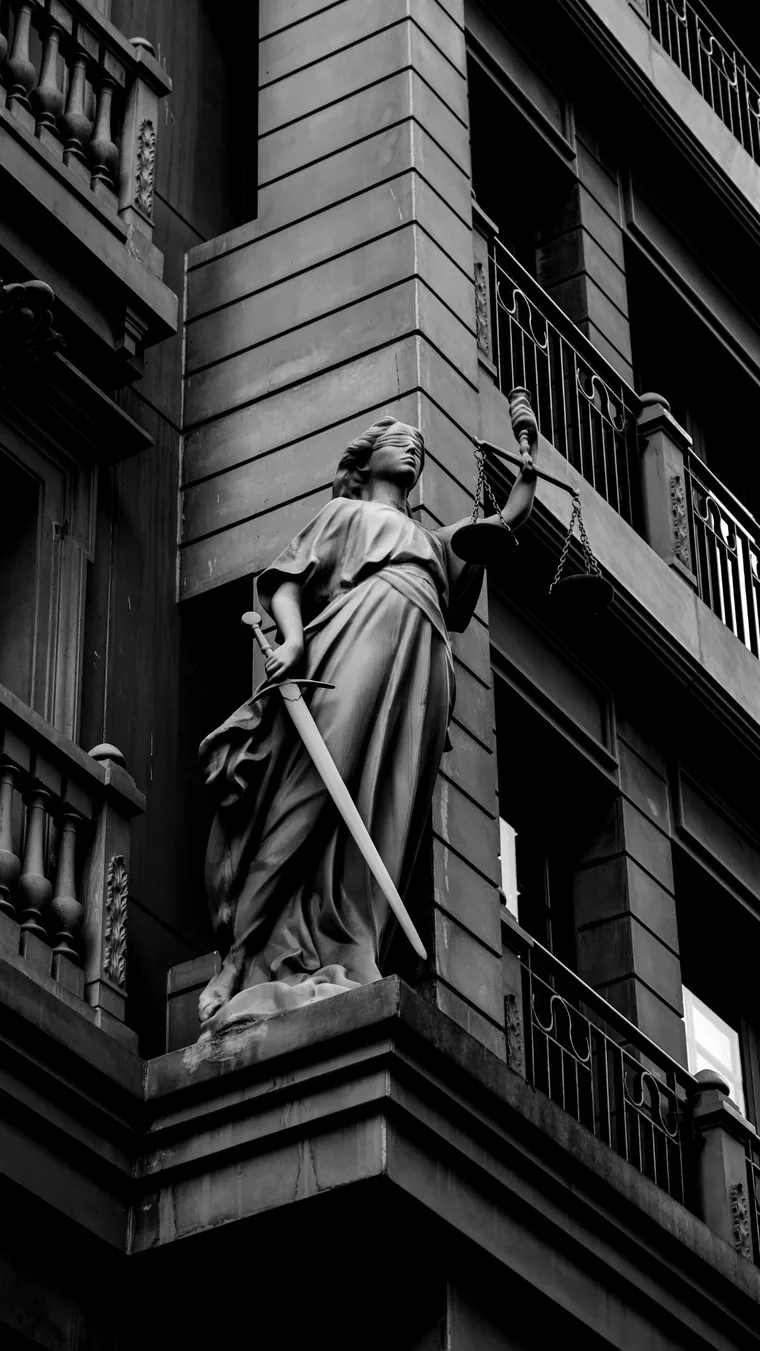
• In most countries, copyright protects an image from the moment it is created: finding it online does not make it free to use.
  • Every Atlantic case is built on preserved evidence and reviewed by a person before any step is taken.
  • Verified proof of a licence or permission closes the case.
  • Photographers, agencies and creators: submit your case for a documented rights review.
  • Recipients: reply, provide a licence or settle through your secure case portal.
  • Atlantic Image Defense LLC, registered in the State of New York, DOS ID 7924876.

Protect your images with evidence-led rights support.

ATLANTIC IMAGE DEFENSE LLC helps photographers, visual creators and stock-content contributors document unauthorized image use, organize copyright evidence and prepare responsible enforcement steps.

Copyright Claims Board

Video: U.S. Copyright Office, Copyright Claims Board (ccb.gov). Shown for information purposes.

Video: U.S. Copyright Office, Copyright Claims Board (ccb.gov). Shown for information purposes.

2022

First launch in 2022Preparatory work since 2007. The company, Atlantic Image Defense LLC, was incorporated in New York in 2026.

5

Service languagesEnglish, German, Spanish,Italian and French.

6

Core servicesMonitoring, evidence, enforcement support,licensing review, legal handoff and case intake.

24

Hours of access per daySecure portal: reply at any time.Every reply is read by a person.

RECEIVED AN ATLANTIC CASE REFERENCE?

Access the secure response portal

Use the case reference and private access code shown in the PDF or secure email to provide licence evidence, respond to the case or select an available settlement option.

Access a case
EXTERNAL ESCALATION · HUMAN REVIEW REQUIRED

Unresolved copyright matters may proceed beyond direct correspondence.

After documented human review, a sufficiently supported matter may be notified to a relevant hosting provider, platform or other intermediary and may be referred to qualified counsel to assess appropriate provisional or injunctive measures under the law that actually applies.

Removing the reported image later does not erase evidence already preserved. Screenshots, URLs, dates, metadata, preserved records and SHA-256 fingerprints retain a traceable record of what was documented; relevant provider logs may also assist where they lawfully exist and can be obtained.

Any removal, access restriction, account action or hosting measure is decided by the service provider or competent authority. Atlantic does not control that decision, its timing or its scope, and cannot guarantee reversal after a third party has independently acted. Where appropriate, documented amicable resolution remains available before external escalation.

Legal references, where applicable: 17 U.S.C. § 512(c)(3) and § 512(j); Regulation (EU) 2022/2065, Articles 9 and 16; Directive 2001/29/EC, Article 8(3); Directive 2004/48/EC, Article 11; WIPO Copyright Treaty, Article 14; TRIPS Agreement, Article 50.
U.S. COPYRIGHT CLAIMS BOARD · CONTROLLED REVIEW PATH

A structured U.S. small-claims pathway may be considered for certain eligible copyright disputes.

The Copyright Claims Board (CCB) is a three-member tribunal within the U.S. Copyright Office, created by the Copyright Alternative in Small-Claims Enforcement Act of 2020 (CASE Act, 17 U.S.C. §§ 1501–1511). For certain eligible disputes, it offers a simplified alternative to federal court, with total monetary recovery capped at $30,000.

A recovery ceiling set by statuteIn a CCB proceeding, total monetary recovery cannot exceed $30,000. This is a procedural ceiling, not an amount automatically owed in any Atlantic case: any amount depends on the claim, the evidence and the applicable law.
Participation is voluntaryIf a CCB claim is later filed and properly served, a respondent generally has 60 days from service to opt out. A timely opt-out dismisses that CCB claim without prejudice; the claimant may then consider federal court.
Atlantic uses a suitability review, not automatic escalationPotential suitability is assessed from the verified rights-holder authority, preserved evidence, U.S. respondent information, registration or application status, amount in dispute, response history and other applicable procedural requirements.
Cross-border access - U.S. respondent requiredA claimant may be located outside the United States and use the CCB when the other requirements are met. For an affirmative CCB claim, the respondent generally must reside in the United States.
Amicable resolution DMCA / provider review CCB suitability review Counsel / court review
No CCB filing, court action or external procedure is initiated automatically. Any further step requires documented human review and appropriate authority.
Exchange space

A dedicated place for questions, feedback and useful exchanges.

Ask a question, share an experience or suggest an improvement in a page designed specifically for public exchange with Atlantic.

Dedicated spaceMessages linked to an Atlantic case
Public exchangesQuestions, feedback and suggestions
Atlantic repliesClear answers in the same space
Atlantic Image Defense community exchange
Speak, ask, suggest.

Messages are published after moderation. Criticism is welcome when it is factual and respects the people concerned.

Publication rules

Speak freely. Stay factual. Respect people.

Positive, neutral and critical testimony are welcome. A message is not refused merely because it criticizes Atlantic. Publication depends on relevance to the case experience, factual presentation, privacy and respectful language.

Freedom to speak

Describe what you personally experienced, including dissatisfaction, delays, disagreement or positive feedback. Clearly separate what you observed from your opinion, interpretation or question.

What will not be published

  • Defamatory, knowingly false, fabricated or materially misleading statements, or unsupported accusations presented as established fact.
  • Harassment, threats, intimidation, insults, incitement to violence or targeted abuse.
  • Racist, xenophobic, antisemitic, anti-Muslim, homophobic, transphobic, sexist or other hateful or discriminatory content.
  • Off-topic political or religious advocacy, attacks on beliefs or identity, spam, advertising, impersonation or content unrelated to the case experience.
  • Case-access codes, passwords, confidential documents, unnecessary personal data or private information about third parties.

Keep it tied to the case

Use dates, letters, actions and outcomes that relate to your case. When something is an interpretation, say “I believe”, “in my experience” or “I understood”. Avoid legal conclusions unless they are documented in the materials you actually received.

Editorial separation from case handling

The Exchange Space is a separate editorial channel from the case-handling workflow. A publication decision does not decide, change, validate or prejudge the legal or financial outcome of a case. Approval of a testimony also does not mean that Atlantic confirms every factual statement made by its author.

Tips for a testimony that is easier to publish
  1. Use a short, descriptive title and write in the first person.
  2. Present events in chronological order and include useful dates when known.
  3. Separate verified facts from assumptions, feelings and questions.
  4. Remove access codes, passwords, confidential attachments and unnecessary personal information.
  5. Focus each testimony on one case experience and, where possible, end with the clarification or response you are seeking.

Moderation concerns publication suitability, not whether a testimony is favorable to Atlantic. Critical content can be published when it complies with these rules.

VISUAL IDENTITY

Your image circulates. Keep visibility over its use.

Brands, artists, athletes, public figures, executives, labels and agencies can now request structured monitoring of portraits, campaigns, covers, products and visual assets across covered online sources.

Monitoring preview 4 signals
  • Official portrait detected media.example · 2 min
  • Partner domain recognized partner.example · 8 min
  • Merchandise identified shop.example · 14 min
  • Authorization period ending campaign.example · 3 days

Example signals. Select a status to see what it means.

image
Built for photographers

We help creators turn suspected image misuse into evidence that is organized, traceable and ready for review.

Detect the use

We help identify where a protected image appears and preserve the surrounding online context before it changes.

Review before action

Before taking a position on a case, we review the protected-work records, publication history, authority, licensing context and preserved evidence.

Workspace subscription plans

Choose the workspace that fits the way you protect and monitor your images

Start free or choose a Professional or Enterprise subscription with monthly and yearly billing options. The same plans are used during account registration.

  • Three workspace levels for independent creators, professional studios and larger teams.
  • Paid plans are available with monthly or yearly billing.
  • Plan capacity scales protected images, users, monitoring targets and monthly scans.

A secure workspace for image monitoring, evidence organization and documented case workflows.

Independent photographers and personal accounts Starter
Free
50 protected images
Agencies, publishers and large image libraries Enterprise
MonthlyUSD 129.00 per month
YearlyUSD 1,290.00 per year
10,000 protected images
Independent rights protection

A position is only as strong as the record behind it.

Every material statement in an Atlantic Image Defense file can be traced back to its source: the date, the rights record, the use observed and the review decision that followed.

Complex matters are explained plainly, without claiming more than the evidence shows. Technical detection and legal assessment are kept apart, the recipient always has a way to respond, and any escalation stays in line with what has actually been verified.

A finger activating a secure digital interface representing controlled access
A professional examining and organizing documents and photographs in a case file
Access and sources

Access is secured before any review of substance

A reliable file starts with tight control over who can access it, what it covers and where each document comes from. Account access, case references, original files and public observations are kept apart, so that sensitive information is kept separate from unverified web data. The record shows what was received, when, and through which channel.

Controlled access

Private references and restricted workspaces limit each case to the people involved in it.

Separate sources

Originals, screenshots, URLs, correspondence and third-party material stay identifiable instead of being merged into one unclear bundle.

IN PRACTICE

An organized file from the first document received

Opening a case is not a matter of collecting files. We first identify who is submitting it, in what capacity, under which reference and for what exact purpose. Each document is then logged with its channel, its date and its role, so it is clear from the outset what is an original, a working copy, a public observation or simply a party’s statement.

Source files, screenshots, web addresses and relevant exchanges remain recognizable throughout the review, and any conversion made for reading or comparison keeps track of the original. If information is missing, a link no longer works or a file was altered after it was sent, the file says so instead of filling the gap with an assumption.

Access follows need: sensitive documents are open only to the people working on the matter, and public information is kept separate from private references. None of this settles the legal question in advance. It means that anyone reviewing the file later can see where each finding comes from and what still needs to be confirmed.

A legal review meeting around documents and a figure of Justice
A typewriter showing the word Review as a symbol of independent revision
Rights and context

Human review tests the record, not the recipient

A visual match can justify a closer look, but it does not prove infringement on its own. Reviewers therefore check authorship or authority records, publication history, licensing information, the visible context, possible exceptions and who is actually responsible. Weak assumptions are dropped before anything is said outside the platform.

Both sides of the record

Known authorizations, partner domains and contradictory material are recorded alongside the suspected use.

Checked before sending

Draft conclusions and letters are checked for accuracy, scope and factual support before they leave the platform.

SUBSTANTIVE REVIEW

Conclusions drawn from what the record shows

Detecting a similar or reused image is a reason to review, never a conclusion. The image found online is compared with what is known about its creation, first publication, ownership, the authority to act, existing licences and the context in which it appears. Limits of duration, territory, medium or campaign are taken into account whenever they could change the reading of the case.

Evidence pointing to an authorization gets the same attention as evidence pointing to misuse. A partner domain, an invoice, a licence, an assignment, an editorial permission, a legal exception or a simple identification error can change the direction of a review. Contradictory material is weighed rather than set aside, and when the information is insufficient, the question stays open.

Wording matters too. A confirmed fact, a reasonable inference and an open question are not written the same way. Before any letter goes out, the file must show what is known, what has been checked, what is only alleged and what is being asked of the recipient. The strength of the process lies in that precision, not in categorical statements.

Notes and annotations being added during documentary analysis
Detailed review of highlighted contractual clauses
Chronology

A timeline that explains the matter without exaggerating it

Scattered material is turned into a dated, readable sequence: creation or first publication, known licences, the online use observed, capture dates, identification of the recipient and the exchanges that followed. The timeline makes clear what was observed directly, what was supplied by a party and what still has to be confirmed.

Notes taken at the time

Review notes record the reasoning linked to each source, so nothing depends on memory once the page has changed.

Licence review

Contract terms, territorial limits, duration, media covered and transaction records are examined where they exist and are relevant.

READING THE TIMELINE

Each event tied to a date, a source and a defined scope

A useful timeline does more than list dates. It links each event to an identifiable source and explains its role: creation or first known publication, an existing licence or permission, the appearance of the use, the capture date, the identification of the presumed responsible party, the first contact and any reply. The order in which things were discovered is never confused with the order in which they happened.

Web pages change and content disappears. Notes made during the review therefore record what was visible, where, and under what conditions. A screenshot does not replace the full context; it captures one moment of it. If a later exchange produces a licence, corrects a date or points to another responsible party, the analysis is updated and the earlier history is kept.

Another authorized reviewer can then find the key documents quickly, tell contemporaneous information apart from later reconstruction and see which steps still need confirmation. Avoiding shortcuts and hindsight makes the file easier to revise and keeps the next decision in line with the actual state of the record.

A confidentiality agreement prepared for restricted handling
Structured analysis of reports and data beside a laptop
Confidentiality

Sensitive documents used for a defined purpose

Confidential documents are never used for show or as leverage. Each one is tied to a specific question, a limited audience and a traceable history of use. Summaries keep the document itself distinct from the interpretation drawn from it, which limits the risk of unsupported or misleading statements.

Limited use

Private material is used only for the purpose for which it was provided, in line with the platform’s policies and controls.

Ready for audit

Findings, gaps, decisions and changes are organized so that another authorized professional can review the file without rebuilding its history.

DOCUMENT HANDLING

Protecting confidentiality while keeping the file reviewable

Confidentiality only works if the file is well organized. Each sensitive document is linked to a purpose, an access level and a stage of the work. Personal, contractual or commercial information that the analysis does not need has no place at the centre of the file.

The original document, its working copy and any summary are kept distinct, and a conclusion never hides the exact wording it relies on. Relevant extracts, version references and stated reservations maintain that separation. When a document cannot be shared in full, the file still records its role, its origin and why access is restricted.

An authorized professional can therefore see why a document was used, which statement it supports and what restrictions apply, without receiving more than necessary. Gaps, corrections and changes of assessment remain visible: confidentiality protects the information, but it never hides the reasoning.

A professional reviewing a report and connecting conclusions to the record
Methodical preparation of documents for formal correspondence
Correspondence

Precise letters, proportionate action and a real right of reply

A strong notice is not the loudest one. It identifies the work and the use observed, states the rights relied on, separates verified facts from open points and gives the recipient a secure way to respond. A licence, a correction or any other explanation can then be reviewed before the next decision.

Statements backed by the file

Every material statement must be supported by the file, and uncertainties or missing information remain visible.

Gradual escalation

Correction, licence discussion, platform notice, settlement and referral to a lawyer are separate options, not an automatic sequence.

HOW WE WRITE

Writing to get a useful answer, not to dramatize the dispute

A useful letter starts from facts that can be checked: the work concerned, where and when the use was observed, the rights relied on and what is actually being requested. It avoids generalizations, definitive labels while key questions remain open, and demands that the evidence does not support. The recipient should be able to understand the issue, find the content and know how to respond securely.

A reply may bring a licence, a permission, details about the site publisher, a factual correction or the name of another responsible party. That information is treated as something that can change the file, not as an obstacle. A clear response channel improves the review, avoids needless exchanges and helps distinguish a resolved situation from a mistaken attribution or a genuine disagreement.

The next step always matches the state of the matter. A correction request, a licence discussion, a platform notice, a settlement conversation and a referral to a lawyer are different paths, not stages of an automatic process. Every decision must be explainable from the documents and exchanges on file. Credible correspondence relies on restraint, consistency and a real opportunity for both sides to be heard, never on intimidation.

Specialized requests

A precise intake path for each requester

Sensitive requests are prepared before submission, technically checked, and then held for human approval before any follow-up.

Special-intake submissions enter a documented human review of identity, authority, evidence and scope before any consequential external case step.
Core services

A practical protection framework for visual-rights holders

Surveillance cameras mounted on a pole

Image Monitoring

Find and track suspected reuse of your images on websites, marketplaces, blogs and public platforms.

Learn More
Sharpened pencils on a printed design sheet

Copyright Evidence

Structured evidence files that bring together dates, URLs, screenshots, source references and context.

Learn More
Photographer reviewing images on a camera beside a laptop

Enforcement Support

Clear, proportionate material for platform notices, takedown requests and follow-up.

Learn More
Film negatives examined with a loupe on a light table

Licensing Review

Check whether a use appears licensed, unclear or expired, or could support a licensing discussion.

Learn More
Two professionals reviewing and signing a document

Legal Handoff

Facts, documents and chronology organized for qualified counsel when legal review is warranted.

Learn More
Document folders arranged in a filing box

Case Intake

A simple starting point for photographers who want suspected image misuse reviewed.

Submit a case
Documented workflow

From the first signal to a decision that can be reviewed

Before any external step with material consequences, each matter is reviewed against the protected work, authority, observed use, licensing history and relevant context, with that review documented in the case.

  1. 01
    Preserve the source

    Record the URL, page context, dates and available screenshots before the online material changes.

  2. 02
    Verify rights and licensing

    Compare the observed use with protected-work records, publication history, authority and any known licences.

  3. 03
    Classify the result

    Use human review to distinguish authorized use, insufficient evidence and potentially unauthorized use.

  4. 04
    Prepare the next step

    Organize a defensible case file for resolution, the relevant platform procedure or referral to qualified legal counsel when the verified record supports that step.

Why trust the process

Effective image protection starts with documented facts and disciplined action.

Our process preserves the record, verifies authority and licensing context, then prepares the next appropriate step for the jurisdiction concerned. If a matter remains unresolved, it may proceed to platform procedures, qualified counsel and competent courts or authorities when the documented case record supports that course.

0

Automatic legal stepsEach external step is decided by a person.

5

Languages of correspondenceEN · DE · ES · IT · FR

2026

Incorporated in New YorkLimited liability company

image
Clear answers

Understand the process before you start

These questions cover the points that most often determine whether a review can proceed efficiently.

View all questions
How is an image match qualified?

An image match is checked against protected-work records, authority, licensing context, publication history and preserved evidence before any case position is taken or any external communication with material consequences is sent.

What should I prepare for a review?

Provide the original or source file, the suspected URL, the date you discovered the use, any available screenshots, and any licence or publication records you hold.

Can the recipient provide licence evidence?

Yes. The secure response portal allows a recipient to answer the case, upload supporting information and select an available response path.

How are external case steps authorized?

External steps with material consequences require documented human review and authorization. The action selected must correspond to the verified case record, authority, jurisdiction and applicable procedure.

Insights

Guides for photographers and stock contributors

A record you can check

Each step of an Atlantic case is documented with its source.

Evidence, authority and correspondence stay in one documented file, open to the parties concerned through the secure portal and, for counsel, the lawyers’ area.

Institutional overview

Documented image protection, rights review and international case administration

Atlantic Image Defense helps photographers, studios, agencies and authorized representatives organize protected-work records, review suspected online uses, preserve evidence and administer documented case progression. When an unresolved matter meets the required authority, evidentiary, jurisdictional and proportionality criteria, it may progress through appropriate platform procedures, qualified counsel and competent courts or authorities.

  1. 01Protect the source
  2. 02Detect or import a signal
  3. 03Verify rights and context
  4. 04Classify with human review
  5. 05Prepare the appropriate next step
01

What Atlantic is designed to do

Atlantic provides operational infrastructure for protected-work intake, rights-record review, technical matching, evidence organization, contact research, secure responses and case administration. The purpose is to maintain a traceable record from the protected work and authority through observed use, correspondence and resolution.

The service is structured around traceability: who supplied an image, what was observed, when it was observed, which records were available, which decisions were made and who authorized a next step.

  • Organize originals and rights records
  • Preserve URLs, dates and context
  • Separate suspected, authorized and unresolved uses
  • Keep correspondence and evidence history together
02

Scope, authority and operating standard

Atlantic operates as an independent rights-management and case-administration company under documented mandates. Technical findings are evaluated together with protected-work records, authority, licence context and preserved evidence before a case position is adopted.

Where judicial remedies, compulsory measures or formal representation are appropriate, the matter progresses through qualified counsel and competent authorities under the applicable law and jurisdiction. Atlantic’s role is to build and administer a defensible record and take authorized steps within that framework.

03

International, jurisdiction-aware rights enforcement

Copyright protection operates internationally through national and regional legal systems. Atlantic therefore preserves the record, verifies authority, examines licences and relevant exceptions, documents material facts and uses human review to determine the appropriate case route.

For cross-border matters, unresolved files may be referred to qualified counsel for jurisdiction-specific assessment and, where the verified record and mandate support it, may proceed before the competent authority or court.

Legal and institutional references

These links point to official or institutional sources. Their inclusion does not mean that every text applies to every matter.

Atlantic Image Defense commitment

Silence does not close a case.

From the first letter, the case is built: evidence preserved, the rights holder’s authority verified, the website’s hosting provider identified where it can be determined. It is then pursued to its outcome: a verified authorisation, an amicable agreement or, failing these, the decision of the competent authority.

Committed from the first letter

The rights holder has instructed Atlantic, and the resources of the case are committed before it is sent. An open case is not abandoned.

Silence is recorded

A lack of response is dated and added to the case file. It may be presented to the hosting provider, to counsel or to the competent court.

The hosting provider may be notified

The website’s hosting provider is identified. If the case remains unanswered, it may receive a notice together with the evidence, after human review.

Atlantic administers rights, evidence and case-resolution workflows under documented authority. Judicial remedies and compulsory measures are pursued through competent authorities and qualified counsel where applicable.

Explore the full workflow